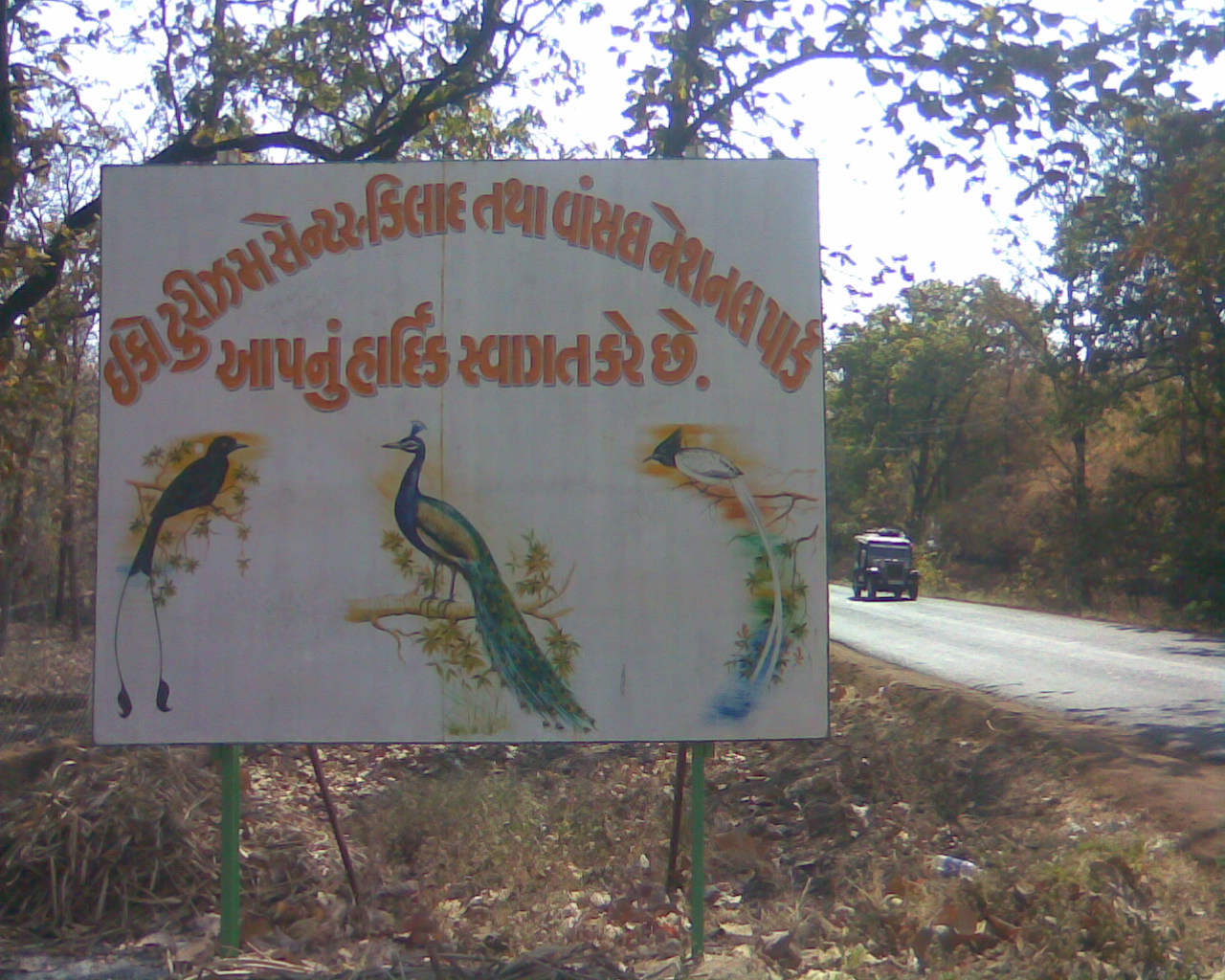
Overview: The Enchanted Rainforest of South Gujarat
situated in the lush southwestern foothills of the Sahyadri (Western Ghats) mountain range across Vansda taluka of Navsari district and the western fringes of The Dangs, Vansda National Park and Wildlife Sanctuary encompasses 23.99 square kilometers of dense, continuous rainforest canopy.
Historically preserved as the private hunting and forest preserve of the Maharajas of the princely State of Vansda, not a single tree has been felled in this forest since 1952. Declared a National Park in April 1979 under the Wildlife (Protection) Act of 1972, Vansda represents one of Gujarat's highest-density closed-canopy forests, where sunlight rarely penetrates to the forest floor in many interior ravines.
Flanked by the perennial **Ambika River** along its northeastern boundary and traversed by the historic Waghai-Bilimora narrow-gauge railway line (built in 1929 by the Gaekwads of Baroda, operating unfenced through the forest), Vansda shelters over **443 species of flowering plants**, **155 species of birds**, **30 species of snakes**, and **121 species of spiders**, including the colossal **Giant Wood Spider** (Nephila maculata).
Canopy Stratification & Sahyadri Floral Wealth
Receiving heavy annual monsoon rainfall (1,500 to over 2,000 mm), Vansda exhibits a multi-layered rainforest architecture:
Vertical Forest Stratification at Vansda
| Forest Layer |
Height & Characteristics |
Dominant Plant Species |
Specialized Wildlife Inhabitants |
| Emergent & Top Canopy |
25 to 35 meters; towering deciduous hardwoods. |
Sadad (Terminalia tomentosa), Teak, Haldu, Sissoo, Kalam. |
Great Indian Hornbill, Giant Flying Squirrel, Crested Hawk-Eagle. |
| Sub-Canopy & Bamboo |
10 to 20 meters; dense bamboo brakes. |
Manvel bamboo (Dendrocalamus), Katas bamboo (Bambusa bambos). |
Barking deer, Leopard, Malabar Trogon, Rhesus macaque. |
| Lianas & Epiphytic Layer |
Climbing woody vines and tree-trunk epiphytes. |
Giant Liana (Bauhinia vahlii), wild orchids (Aerides, Vanda). |
Giant Wood Spiders, tree frogs, geckos, colorful beetles. |
| Forest Floor & Riparian |
Humus-rich mossy ground along stream banks. |
Wild ginger, ferns, Jamun, Karanj, Arjun along Ambika river. |
Rusty-spotted cat, Indian pangolin, pit vipers, freshwater crabs. |
During the height of the monsoon from July to September, the humid forest floor becomes home to extraordinary **bioluminescent fungi** (*Mycena* species). Decaying teak logs emit an eerie, natural neon-green glow in the total darkness of the deep rainforest ravines, an incredible phenomenon documented by mycologists and nature photographers.
Rainforest Fauna & Canopy Specialists
Vansda's undisturbed canopy supports an extraordinary diversity of mammals, birds, and invertebrates:
Indian Leopard
Panthera pardus • Apex Predator
Possesses exceptionally high territory density in Vansda, stalking through the dark bamboo undergrowth and resting on heavy tree limbs.
Giant Wood Spider
Nephila maculata • Colossal Arachnid
Weaves massive golden-silk orb webs spanning up to 2 meters across forest clearings, capturing large flying insects and small birds.
Rusty-spotted Cat
Prionailurus rubiginosus • World's Smallest Cat
Weighing barely 1.5 kg, this elusive nocturnal feline hunts rodents, frogs, and small birds in the dense leaf litter.
Four-horned Antelope
Tetracerus quadricornis • Chousingha
Shy, solitary bovid that browses selectively on herbs and fallen wild fruits along steep hillside ravines.
Malabar Trogon
Harpactes fasciatus • Jewel of the Western Ghats
Stunning crimson-bellied rainforest bird that perches silently in the sub-canopy, sallying out to catch katydids and cicadas.
Grey Junglefowl
Gallus sonneratii • Western Ghats Endemic
Wild ancestor of domestic chickens with spotted golden-wax neck hackles, scratching for seeds and insects in bamboo thickets.
Vansda is also renowned among entomologists for over **120 species of butterflies**, including the spectacular **Blue Mormon** (one of India's largest swallowtails), **Oakleaf**, **Common Jezebel**, and **Crimson Rose**.
Dangi Culture, Warli Art & Kilad Ecotourism Campsite
The park is enveloped by the rich tribal culture of **The Dangs**, predominantly inhabited by the **Bhils**, **Kunbis**, and **Warlis**. The indigenous communities possess ancient knowledge of forest conservation, utilizing wild bamboo for traditional architecture and painting rhythmic **Warli art** depicting sacred trees, animals, and harvest dances on mud-plastered walls.
Adjacent to the park on the banks of the Ambika River lies the **Kilad Nature Education Campsite**, managed jointly by the Forest Department and local tribal eco-guides. Kilad offers tree houses, machans, butterfly trails, and nocturnal safaris.
Visitor Information, Nature Trails & Practical Details
Vansda is an unforgettable destination for nature walks and botanical exploration:
Safari Planning & Practical Details
- Best Visiting Months: October through March. Post-monsoon (October–December) offers crystal-clear jungle streams and lush foliage, while winter brings optimal birdwatching.
- Sanctuary Timings: 08:00 AM to 06:00 PM daily.
- Vehicle Safaris & Guide: Private four-wheel-drive vehicles or tourist vehicles are permitted on designated forest tracks accompanied by a certified tribal nature guide.
- Waghai Botanical Garden Link: Located just 5 km from the park entrance, Waghai Botanical Garden is Gujarat's largest botanical garden, featuring hundreds of indigenous medicinal trees, cacti, and an orchid house.
How to Reach Vansda National Park
Vansda is well-connected via the South Gujarat highway network:
Gateway Transit Routes
- From Waghai (Dangs Gateway): Approx. 5 km west along SH-14 (approx. 10 minutes by car).
- From Navsari (District HQ): Approx. 65 km east via Chikhli and Vansda (approx. 1.5 hours).
- From Surat: Approx. 100 km southeast via Navsari and Vansda (approx. 2.5 hours).
- From Saputara Hill Station: Approx. 40 km northwest via Waghai (approx. 1 hour).
- By Train: Bilimora Junction (BIM) (~50 km) is the main broad-gauge junction; the heritage Waghai Narrow Gauge Railway Station is just 5 km away.
- Nearest Airport: Surat International Airport (STV) (~110 km) and Mumbai International Airport (BOM) (~260 km).
Explore Navsari & The Dangs Districts
Vansda National Park is the green heart of South Gujarat. Explore the scenic waterfalls of Gira and Barda Falls, ascend the cool pine hills of Saputara, discover the historic Parsi heritage fire temples of Udvada and Navsari, and experience the timeless bamboo art of the Dangs.
Navsari District Guide →
The Dangs Guide →
Frequently Asked Questions
What makes Vansda National Park unique in Gujarat?
Vansda is Gujarat's premier closed-canopy Western Ghats rainforest sanctuary, where no tree has been cut since 1952, hosting dense bamboo jungles, leopards, giant wood spiders, and over 440 flowering plant species.
What is the Giant Wood Spider in Vansda?
The Giant Wood Spider (Nephila maculata) is a colossal arachnid found in Vansda that spins massive golden-yellow silk webs up to 2 meters wide between forest trees.
Where is Kilad campsite located?
Kilad campsite is an ecotourism center situated right on the banks of the Ambika River adjacent to Vansda National Park, offering eco-cottages and guided night nature walks.
How far is Vansda National Park from Saputara?
Vansda National Park is located approximately 40 kilometers northwest of Saputara Hill Station via Waghai (approx. 1 hour drive).