Cosmic Genesis: Lord Indra's Consecration and the White Marble Lingam
Perched on the southern bank of the holy Krishna River in Palnadu district, Amaravathi (revered historically as Amararamam) is the third of the five sacred Pancharama Kshetras of Andhra Pradesh. According to the Sthala Purana, when the divine Atma Lingam worn by the demon king Tarakasura was shattered into five fragments by Lord Kumara Swamy, the third piece fell on the sacred banks of the Krishna.
Because Lord Indra (the king of the celestials / Amaras) retrieved and consecrated this sacred fragment to atone for sins committed during cosmic wars, the deity was named Sri Amareswara Swamy, and the sacred city came to be known as 'Amaravathi'—the Abode of the Immortals. The Lingam is carved from a magnificent block of white crystalline limestone (locally termed Palnadu marble), soaring to a height of 16 feet.
Local legend records that after consecration, the marble Lingam began growing rapidly toward the heavens. To arrest its physical growth, Lord Indra drove a golden nail into the crest of the Lingam. A faint reddish mark visible on the top of the stone is revered by devotees as the spot where blood oozed from the living bedrock, halting its growth and sealing its divine energy on earth.
The Buddhist Capital: The Great Mahastupa of Dharanikota
Amaravathi occupies a magnificent dual position in Indian cultural history. Just one kilometer from the Hindu temple stands the archaeological site of the Great Buddhist Mahastupa of Amaravathi (Deepaladinne), which flourished from the 3rd century BCE through the 14th century CE as one of the greatest centers of Theravada and Mahayana Buddhism in Asia.
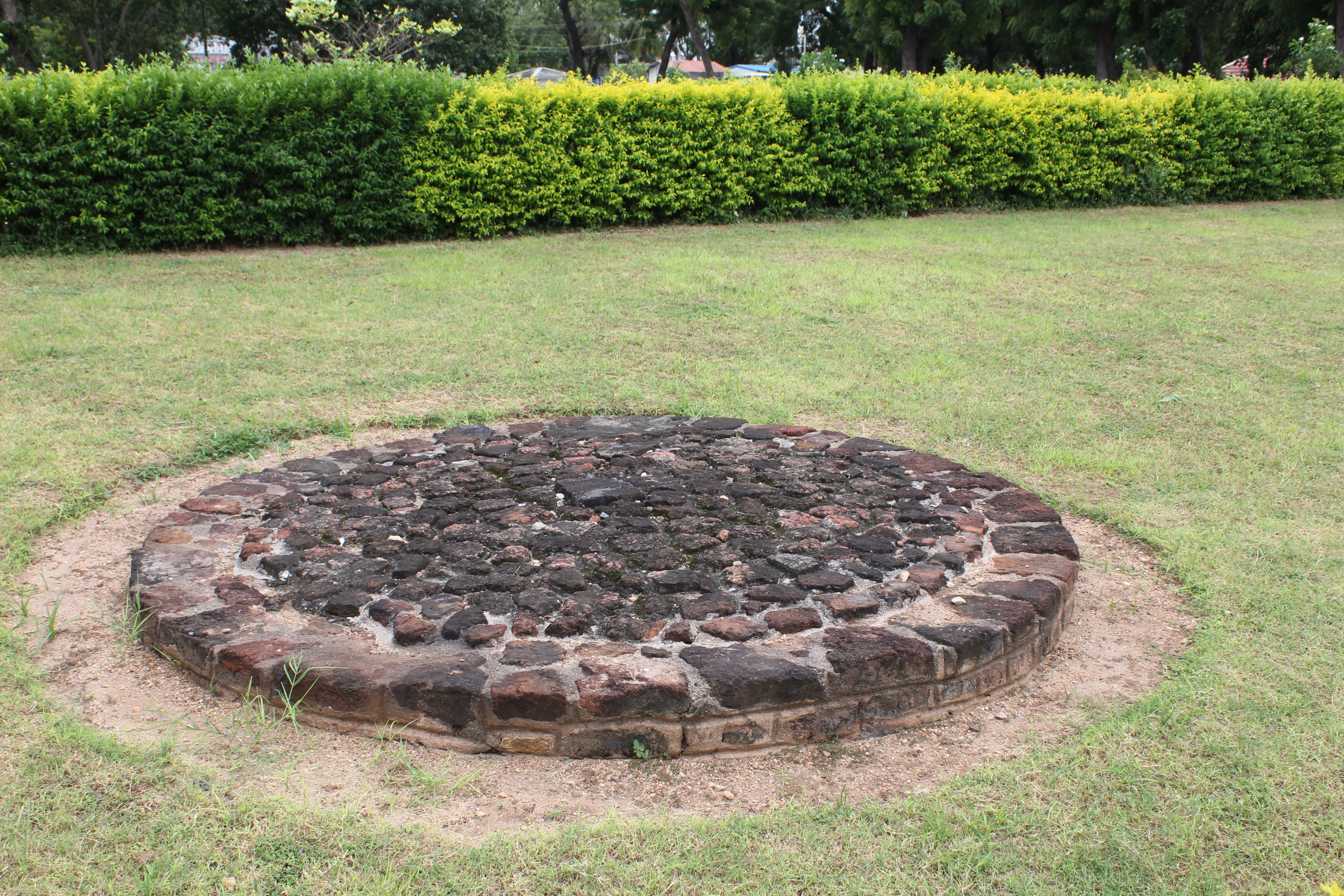
Originally founded during the reign of Mauryan Emperor Ashoka, the Mahastupa was transformed under the royal patronage of the Satavahana Empire into a colossal monument exceeding 50 meters in diameter and 30 meters in height. The stupa was encased in hundreds of intricately carved greenish-white limestone relief slabs depicting the life of Lord Buddha, Jataka tales, and royal processions, giving birth to the world-renowned 'Amaravathi School of Art'.
The nearby ASI Archaeological Museum houses an extraordinary collection of these ancient sculptures, including carved Ayaka pillars, stone umbrella finials, reliquary caskets, and inscribed Brahmi epigraphs that influenced Buddhist artistic traditions across Sri Lanka, Thailand, Cambodia, and Indonesia.

Modern Buddhist Renaissance: The 125-Foot Dhyana Buddha Statue
Celebrating Amaravathi's ancient Buddhist heritage on the contemporary global stage is the monumental Dhyana Buddha Statue, situated on a panoramic 4.5-acre landscaped park overlooking the Krishna River. Completed in 2015, this colossal concrete and stone sculpture rises to an astounding height of 125 feet (38 meters), depicting Lord Buddha seated in serene meditation (Dhyana Mudra) atop an eight-pillared lotus pedestal.
The pedestal beneath the statue houses a multi-tiered museum gallery and meditation hall decorated with relief sculptures illustrating the cardinal teachings of the Buddha. The site has become a major destination for international Buddhist pilgrims, tourists, and meditation practitioners from Southeast Asia and across the world.
At sunset, the monumental white statue is illuminated with soft golden floodlights that reflect gracefully upon the tranquil waters of the Krishna River, creating an atmosphere of profound serenity.
The Swayambhu Lingam at Amaravathi is a towering 16-foot pillar carved from pristine white Palnadu marble limestone. Devotees witness the base from the ground-floor sanctum, while priests climb a wooden stairway to an elevated marble platform to perform the daily Abhishekam on the upper crest of the Lingam. A distinctive reddish tint near the top is revered as the strike mark of Lord Kartikeya's celestial spear.
Sacred River Hydrology: The Uttara Vahini Krishna Ghats
A profound spiritual attribute of Amaravathi is that the Krishna River, which generally flows eastward toward the Bay of Bengal, makes a sudden, dramatic geographic bend and flows northward (Uttara Vahini) for several kilometers directly along the temple's northern boundary.
In Vedic tradition, any holy river that flows northward is considered exceptionally sacred, as north is the direction of Mount Kailasa and the celestial realms. Taking a ritual dip in the Krishna River at the Amaralingeswara Ghat before entering the temple is believed to cleanse ancestral sins and confer liberation.
During the twelve-yearly Krishna Pushkaram festival, millions of pilgrims from across India gather along the Amaravathi ghats to perform sacred tarpanams, Vedic chants, and float illuminated oil lamps on the broad waters of the river.
Transit Gateways, Road Logistics, and Regional Connectivity
Amaravathi is located in Palnadu district, 32 km north of Guntur city and 35 km west of Vijayawada. Guntur Junction and Vijayawada Junction are two of the largest railway hubs in South India, offering hundreds of express train connections across the country.
The nearest commercial airport is Vijayawada International Airport (VGA) at Gannavaram, located approximately 55 km to the east (about a 1.5-hour drive via the Vijayawada bypass expressway).
Smooth, multi-lane state highways connect Amaravathi directly to both Guntur and Vijayawada. APSRTC operates frequent express buses departing every 20 minutes from Guntur bus stand and Vijayawada Pandit Nehru Bus Station. Taxis and auto-rickshaws are readily available for comfortable day-trip circuits.
The Krishna River forms a sharp northward bend (Uttara Vahini) directly beside the temple, which is considered exceptionally auspicious for ritual bathings. However, the riverbed drops abruptly into deep silt-laden channels with strong undercurrents. Devotees must bathe strictly within the protective iron chain enclosures at the paved ghat steps and avoid venturing into open deep waters.
Pilgrim Infrastructure, Prasadams, and Visitor Guidelines
The Sri Amareswara Swamy Devasthanam provides well-maintained pilgrim facilities including shoe stands, cloakrooms, clean drinking water dispensers, and mechanized token counters for darshans and special poojas. A daily Nitya Annadanam dining hall serves free sanctified vegetarian meals to pilgrims between 12:00 PM and 2:30 PM.
Traditional South Indian temple attire is strictly enforced inside the Amareswara sanctum (dhotis for men; sarees, half-sarees, or churidars for women). Photography is prohibited inside the inner sanctum but permitted in the outer courtyards and along the Krishna riverfront.
Visitors to the Buddhist Mahastupa and the ASI Archaeological Museum must purchase an ASI entry ticket (Rs. 25 for Indian citizens) and observe archaeological decorum by not touching ancient carved limestone panels.
Curated Field Dossier & Offline Google Maps Pin Pack
Bypass tourist traps with verified local logistics, exact parking coordinates, and field-tested routes.
- ✓Exact GPS Pin Pack: Unmarked parking spots, best dawn photography vantage points, and hidden trailheads.
- ✓Crowd-Avoidance Timing Matrix: Exact hour-by-hour windows to explore with zero tourist chaos.
- ✓Vetted Local Dhabas: 100% authentic, hygiene-checked regional food stops not on commercial maps.
- ✓Scam & Overcharge Shield: Verified taxi rates, auto fares, and local guide fee guidelines.
🛡️ Personally curated by PK Gupta & the Hidden Routes research desk. Delivered directly to your Email & WhatsApp within 4–8 hours.
Frequently Asked Questions
Field-verified practical and cultural answers for planning your expedition to Amaravathi Amareswara Swamy & Buddhist Mahastupa:
Connecting Andhra Routes
Continue your journey across the Eastern Ghats, Godavari river deltas, Bay of Bengal coastline, and sacred pilgrimage shrines: